
Ash
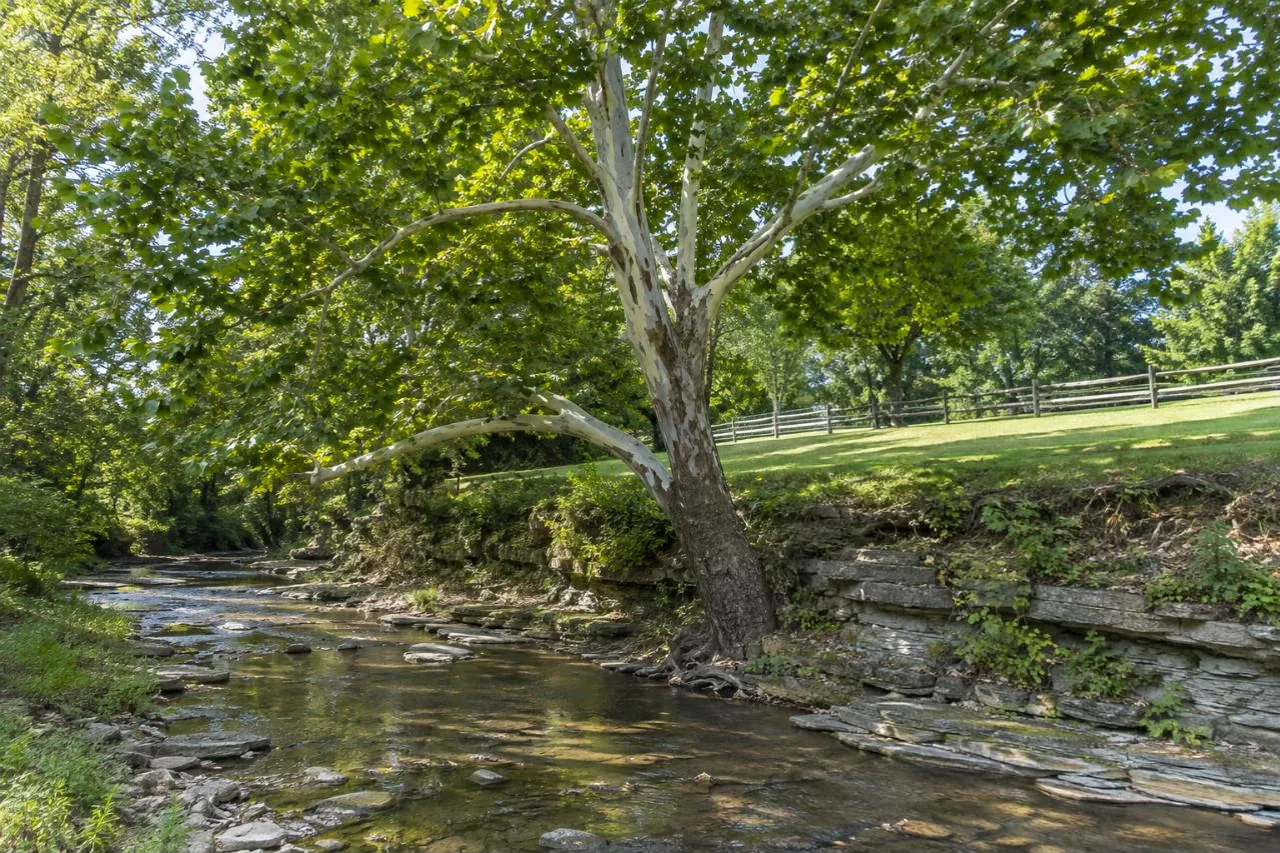
Ash used to be everywhere. Ohio had nearly 4 billion ash trees, about one in ten trees in the state, before the emerald ash borer arrived, according to Ohio State University, and ash was part of the original forest on the county's Miamian soils. The borer was found in Warren County in 2006, and ODNR says an infested ash usually dies in less than five years.
Green and black ash are the most susceptible, white ash still dies at high rates, and blue ash is more tolerant but not immune, Ohio State reported in July 2026. Mason's landscape code now rules out "All Ash Trees" as street trees. Dead ash become brittle and, in Ohio State's words, "can snap at any time without warning." See ash tree removal.
Maples
Maples show up on both sides of the local lists. Mason's code recommends red maple and sugar maple as large street trees, which it defines as trees reaching 50 feet or more, and Springboro's approved street tree list includes sugar maple among its widest-spaced trees (both checked Nov 10, 2026).
Other maples land on Mason's "unacceptable for street tree use" list: silver maple, Norway maple and box elder (checked Nov 10, 2026). The code doesn't explain why, so this site won't guess. What it does tell you is that a silver maple over your roof is a tree the city wouldn't plant along its own streets.
Maples are also among the 12 hardwoods the Asian longhorned beetle attacks in Ohio, along with elms, birches, willows and buckeye. That beetle is next door in Clermont County; see pests below.
Oaks and other natives
The Soil Science Society of America's booklet on Miamian, Ohio's state soil, says those soils were originally forested with white oak, maple, elm, ash and hickory. Mason recommends several oaks as large street trees: swamp white, scarlet, shingle, red and Shumard. Springboro's list includes white oak. Mason does reject one oak for street use, upright English oak (all checked Nov 10, 2026).
A big oak is a big job. On the national table in Thumbtack's 2026 removal guide, last updated March 24, 2026, a trunk 24 to 36 inches wide with a canopy over 30 feet runs $1,562 to $4,117 to remove (checked Nov 10, 2026). That's a national figure; the contractor's written price after seeing your oak is what counts. See published prices.
Callery (Bradford) pear
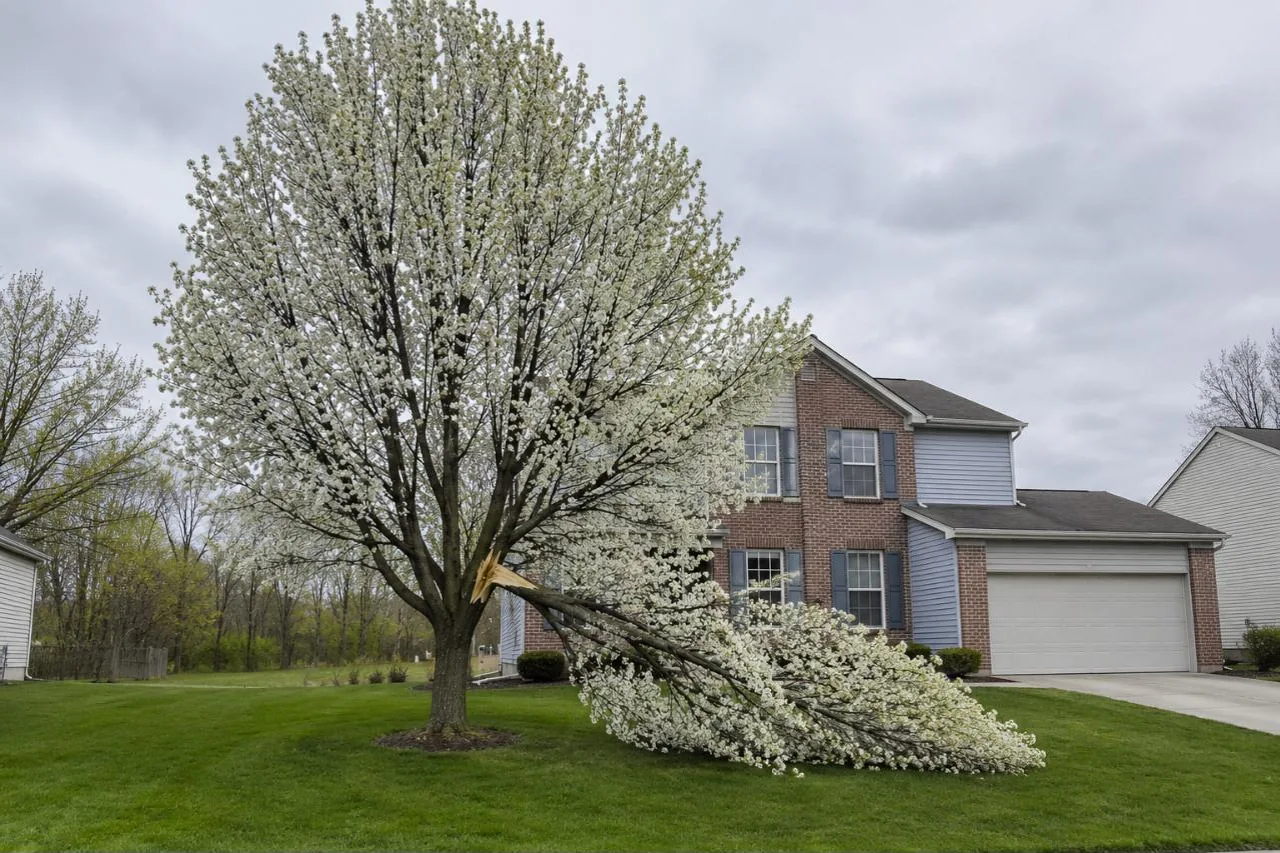
An Ohio State University Extension newsletter from February 2023 refers to "the infamous weak branch structure of the Bradford cultivars." Ohio has since listed Callery pear as an invasive plant: under Ohio Administrative Code 901:5-30-01, no one may sell, offer for sale, propagate, distribute or import it, a ban that took effect for Callery pear on January 7, 2023 after a five-year grace period. Mason lists Bradford pear among its unacceptable street trees (checked Nov 10, 2026).
Ohio State also says "existing trees do not require removal." Whether yours should stay comes down to its forks and what it stands over. ODNR has suggested native replacements including serviceberry, eastern redbud, chokecherry, American plum, flowering dogwood, eastern hophornbeam, American hornbeam, yellowwood, hawthorn and blackgum.
Other trees on the local "don't plant" lists
Mason's Appendix B, "Unacceptable Trees for Street Tree Use," also lists black alder, buckeye and horsechestnut, tree of heaven, paper birch and European white birch, northern catalpa, female ginkgo, Osage-orange, apple, mulberry, poplar, black locust, willow, European mountain ash, 'Moline' American elm and Siberian elm (checked Nov 10, 2026). Again, the code gives no reasons.
The state's invasive plant rule goes further for some of them. Besides Callery pear, its list of trees includes tree of heaven, Russian olive, white mulberry, princess tree, European buckthorn, crack willow and Siberian elm (checked Nov 10, 2026). Tree of heaven matters for another reason: Ohio State calls it the primary host of the spotted lanternfly.
Soils
The Warren County Regional Planning Commission's soils map lists dozens of soil series, among them Miamian, Russell, Xenia, Fincastle, Rossmoyne, Eden, Cincinnati, Avonburg, Fox, Ockley, Genesee and Hennepin, along with cut-and-fill land. Which one is under your yard depends on where you live.
Miamian has been Ohio's state soil since 1984 and covers more than 650,000 acres in west-central Ohio, according to the Soil Science Society of America (checked Nov 10, 2026). It formed from wind-blown silt over high-lime glacial till. The USDA's description, revised in November 2021, gives it:
- A brown silt loam surface about 9 inches deep.
- A subsoil of dark yellowish brown clay loam turning to yellowish brown clay.
- Dense, "very firm" till starting about 33 inches down in the typical profile.
- Permeability "moderately slow" in the upper layers and "slow or very slow" below.
- Roots listed only in the top 26 inches or so, and a perched seasonal high water table 30 to 42 inches down from January to May in normal years.
The booklet lists wetness where the soil is shallow over dense till, and high clay in the subsoil, among its limitations. Neither source ties the soil to falling trees, so this is our reading: roots held mostly above a dense layer, in ground that stays wet through winter and spring, are a setup for a tree to tip over with its root plate in a strong wind.
Hills, creeks and limestone
The county isn't flat. The 1882 History of Warren County describes a surface "far from being a level plain" but without rugged hills, drained mostly by the Little Miami River, with a broad valley running from South Lebanon toward Middletown, a valley about 300 feet deep cut by Dick's Creek, "blue limestone strata," and about 500 feet of relief between the Little Miami's bed at Loveland and the high ground near the county's northern line. Lebanon sits at about 748 feet.
Trees along creeks and valley slopes take storms too. In March 2022, the weather service found trees uprooted and snapped along Todd's Fork in an EF0 tornado near Clarksville. In May 2024, the Dayton Daily News, citing the weather service, reported that a tornado near Morrow knocked down trees on the Little Miami Bike Path as it crossed the river.
Pests moving through southwest Ohio
- Emerald ash borer. Still active. Ohio State said in July 2026 that it "is still present in our forests and landscapes infesting new ash seedlings."
- Spotted lanternfly. Ohio's Department of Agriculture put the whole state under quarantine as of February 17, 2026, after 18 counties had been quarantined before. Trees and nursery stock leaving Ohio need a compliance agreement or permit, or must pass inspection (checked Nov 10, 2026).
- Asian longhorned beetle. First found in Tate Township, Clermont County, in 2011; 118,306 infested trees have been removed. After ODA and USDA released 6.2 square miles on August 17, 2026, about 37.8 square miles of Clermont County remained under quarantine, in parts of Tate Township, East Fork State Park and the East Fork Wildlife Area (checked Nov 10, 2026).
- Box tree moth. Warren County is on Ohio's box tree moth quarantine list, updated January 2026. It's a pest of boxwood shrubs rather than trees (checked Nov 10, 2026).
- Beech leaf disease. Documented in 25 Ohio counties in map data through spring 2023, with dark stripes between the leaf veins. An Ohio State update shared by ODNR's Thomas Macy notes that trees of all ages have occasionally died within 2 to 7 years. If you have beeches, watch the leaves.
Storms on record
Most of the storm record here is wind. The remnants of Hurricane Ike brought an unofficial 78 mph gust to Lebanon on September 14, 2008. The June 29, 2012 derecho left mostly downed trees and limbs across Warren County. On May 7, 2024, an EF1 tornado near South Lebanon caused extensive tree damage. Ice and snow load trees as well: a half inch to an inch of ice coated the Cincinnati–Wilmington corridor in February 2007, and the March 7–8, 2008 storm left 13.6 inches of snow in Mason, 12 inches in Lebanon and 11 in Waynesville, by the weather service's count. The full record is on storm and emergency work.
What to plant
Mason's code sorts trees by size: large trees reach 50 feet or more, medium 30 to 50 feet, small under 30 feet. Its recommended lists (checked Nov 10, 2026):
| Size | Examples from Mason's recommended lists |
|---|---|
| Large, 50 ft and up | Red maple, sugar maple, sugar hackberry, katsura, ginkgo, Kentucky coffeetree, sweetgum, swamp white oak, scarlet oak, shingle oak, red oak, Shumard oak, bald cypress, 'Redmond' linden, silver linden, lacebark elm |
| Medium, 30 to 50 ft | Hedge maple, yellowwood, Turkish filbert, thornless honeylocust, goldenraintree, black gum, American hophornbeam, sawtooth oak |
| Small, under 30 ft | Trident maple, paperbark maple, serviceberry, fringe tree, hawthorns, crabapple, Japanese tree lilac, blackhaw viburnum |
Mason's 2013 list still names ash and Callery pear, which are now off the table. Under overhead wires on public land, Lebanon allows only small species from its Shade Tree Commission list, and Lebanon Electric asks that all plants stay at least 10 feet from its poles and equipment. Call OHIO811 before digging the hole; it asks for a call any time soil is disturbed, like tree planting (all checked Nov 10, 2026).
Tree questions
Is it illegal to have a Bradford pear in Ohio?
No. Since January 7, 2023, Ohio bars selling, propagating and distributing Callery pear, but Ohio State says existing trees do not require removal.
Is the Asian longhorned beetle in Warren County?
The quarantine area that remains after the August 17, 2026 release is in Clermont County: parts of Tate Township, East Fork State Park and the East Fork Wildlife Area (checked Nov 10, 2026). The beetle attacks maples, elms, birches, willows, buckeye and other hardwoods.
What should I plant where an ash came out?
Not another ash, and not a Callery pear. ODNR's native suggestions and Mason's recommended lists above are a good start; match the tree's mature size to the space and keep clear of wires.
Does the spotted lanternfly quarantine affect my yard?
The quarantine has covered all of Ohio since February 17, 2026. It mainly governs trees and nursery stock leaving the state, which need a compliance agreement or permit, or must pass inspection (checked Nov 10, 2026).
Wondering about a particular tree? Call or use the form, and the details go to one independent contractor around Warren County. This site does no tree work.
Sources
- Ohio State University: "Beware of falling ash trees"; "Emerald Ash Borer Still Infesting Trees" (July 1, 2026); "The Ball Drops on Callery Pear in 2023!"; statewide spotted lanternfly quarantine; beech leaf disease; OSU Extension, Highland County newsletter (Feb 2023).
- ODNR Division of Forestry release, reposted by Deerfield Township; USDA Forest Service, Ohio Forest Health Highlights 2006.
- Ohio Administrative Code 901:5-30-01; Ohio Department of Agriculture, Ohio quarantine list (January 2026); Clermont Sun, Aug 19, 2026. Checked Nov 10, 2026.
- City of Mason, Chapter 939 and appendices (revised Nov 18, 2013); City of Springboro, 280.041 street tree list; City of Lebanon, 907.11 and new plantings; OHIO811 FAQ. Checked Nov 10, 2026.
- Warren County Regional Planning Commission, soils map; USDA, Miamian series description (revised Nov 2021); Slater and Wilson, Miamian: Ohio State Soil; Beers, History of Warren County, topography (1882); Lebanon, Ohio (Wikipedia).
- National Weather Service, Wilmington, OH: Sept 14, 2008, Feb 2007 ice, March 7–8, 2008 snow, Clarksville tornado, South Lebanon tornado; NOAA, Storm Data, June 2012; Dayton Daily News, May 2024.
- Thumbtack, Tree Removal Cost Guide 2026 (last updated Mar 24, 2026). National figures, checked Nov 10, 2026.